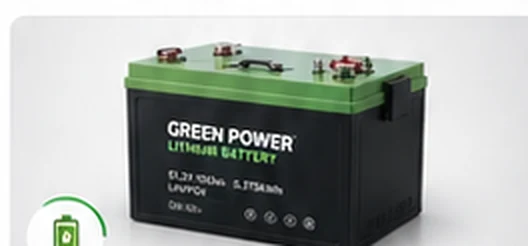
Learn how to compare voltage, capacity, connectors, size, and charger compatibility before choosing a lithium battery for an electric easy bike.
Start with the vehicle, not the battery label
An electric easy bike battery should match the electrical requirements of the complete vehicle. Before comparing brands or capacity claims, record the controller voltage, motor specifications, physical battery-compartment dimensions, connector type, and any restrictions in the vehicle documentation. A physically similar battery is not necessarily electrically compatible.
Understand voltage and ampere-hours
Nominal voltage describes the battery pack’s electrical system, while ampere-hours (Ah) describe charge capacity. Neither number alone guarantees a particular driving range. Route conditions, passenger load, driving speed, motor efficiency, tyre pressure, and battery condition all influence real-world performance. When comparing products, confirm the rated energy in watt-hours (Wh) if it is provided by the manufacturer.
Check the battery management system
Ask whether the lithium pack has a suitable battery management system (BMS), including overcharge, over-discharge, temperature, and short-circuit protections. Confirm that the continuous and peak discharge ratings can support your vehicle. These details are especially important when replacing a different battery chemistry.
Check the charger and installation
Never select a charger from the nominal battery voltage alone. Confirm the manufacturer-approved full-charge voltage, charging profile, polarity, current limit, and plug arrangement. Have a qualified technician inspect the connections and mounting if you are unsure.
Products to review
STH currently lists KinYear and Dowedo lithium battery entries, including models described as 64V and 51.2V. Some imported labels contain unverified units, so treat the listing as a starting point for a specification check rather than proof of compatibility.
Need help selecting compatible products? Explore the STH product catalog and request verified model details before purchasing.